$6.99 expedited shipping! Expedited Same Day Shipping on in-stock orders placed by 5 p.m. EST. See Details

Search the Repair Forum

Show Threads Show Posts

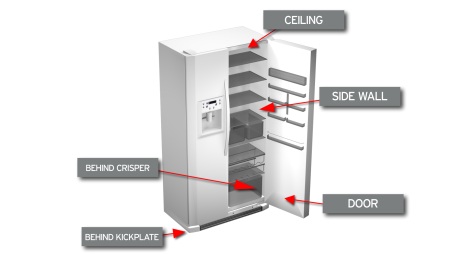
See inside your appliance

See inside your Refrigerator

Enter the model number of your appliance below to get a breakdown graphic of your appliance.

Locate the model number on your appliance.

Appliance Parts

Ready to find your appliance part? Use our Appliance Part Finder to find the part you need.

appliance parts

Suggested Products

Dishwasher Cleaners

Top-Selling Appliance Parts

1. Dishwasher Wheel & Bracket Assembly

Brand: Frigidaire, Part Number: 154174501

Sale price: $6.19

2. Dishwasher Lower Roller Stud

Brand: General Electric, Part Number WD12X10277

Sale Price $0.75

3. Dishwasher Door Latch Assembly

Brand: Frigidaire, Part Number 5304442175

Sale Price $43.24

4. Dishwasher Door Latch Assembly

Brand: Frigidaire, Part Number 5304442173

Sale Price $35.99

5. Dishwasher Nut, Heater

Brand: Frigidaire, Part Number 154106202

Sale Price $3.06

Why are the dishes still dirty?

warning sign

WARNING!

To avoid personal injury or death, disconnect your appliance from its power source before you start any troubleshooting or repair work. Use caution when working inside any appliance.

If the dishes are still dirty after the dishwasher has completed running, first check that you have the right wash cycle selected. This is because you may have selected a short cycle to save water and energy, but it is inappropriate for the load. If that's not the problem, check the water temperature, internal filters, detergent cup, drain valve, pressure switch, sprayer arms, and the water-inlet valve.

Use only detergents that are made for automatic dishwashers. Automatic dishwasher detergents are designed to be low suds. Soft water and hot water use less detergent, while hard water and cold water need more detergent to clean well. This readily available product, SofChek, will help you to determine if you have soft or hard water in a minute or less. These easy-to-use strips measure the hardness of your water in less than a minute. Just simply look at the color chart provided on the bottle for an instant read-out of the strip to help determine the proper amount of detergent.

Good water flow, water pressure, fresh dishwasher detergent, and warm water are all needed for the dishes in your dishwasher to get clean. If the water is not hot enough, the dishwasher can not clean dishes as effectively as possible. To test the temperature, turn on the hot water on your sink to see if the water is getting warm quickly. The selector switch on your dishwasher may let you select a higher temperature setting. You can try that to see if it helps with cleaning. Be careful if you increase the water temperature of your household hot water tank. Your hot water tank should be set to deliver water at about 120F. This may help, but you don’t want to get scalded by it when taking a shower or washing your hands either. Most dishwashers use an internal heater to increase the water temperature to 140-150 degrees Fahrenheit before it will start cycling the dishwater through the spray arms. On some models you can use the Added Heat or Wash Heat Boost selection to increase the wash water temperature. Some dial timer models will let you select Hot Start or other extended washing cycles.

To keep the water free of debris during recirculation, every dishwasher has some kind of filter. Excessive food debris may clog internal filters. Make sure you at least scrape the dishes into the trash first. On some models these filters are self-cleaning, and they don't need to be cleaned regularly. Other models have filters in the bottom of the tub that you do need to clean. You can easily remove these filters. If a filter is full of debris, the water can not circulate properly, and could be causing the dishes to remain dirty. Check to make sure the filter is not blocked or clogged with debris.

The detergent cups have a tendency to get caked with old detergent. This can stop it from opening when it's supposed to. You can try to scrape off the buildup. It may not be worth the effort if it's caked badly, and would save you aggravation just to replace it.

During the drain cycle, the drain valve opens to allow the dirty water out. When the drain cycle is over this valve is supposed to remain closed to prevent water from leaving the dishwasher until the next drain cycle. If any debris plugs the valve, it will not close or seal properly. If it is not sealed, water will drain out while the unit is washing the dishes. If this is happening, you will hear water running in the drain pipes from the dishwasher. This is a sign that you need to clear the obstruction or replace the drain valve. One of the reasons for dirty dishes may even be that the drain valve is clogged and won't let dirty water out.

A faulty pressure switch can sometimes leave dirty water in the unit, or not let the unit fill enough. If you notice too much water left over in the machine after a cycle, this switch could be defective. Sometimes the float itself can get all gummed up with mineral and food deposits and stick in the float tube. It needs to be swapped out.

Occasionally, the spray arms can get clogged with debris. This can be caused by food or even hard water deposits. This prevents the water and detergent from getting to the dishes to clean them. If you notice a clog try to use a pipe cleaner, straight pin, or toothpick to clean the holes, or just replace the spray arm.

The water-inlet valve is another possibility. This valve is connected to the main water line from the house. If the dishwasher can't get enough water, it can't wash the dishes. This valve is actuated by a solenoid system. If it loses power, it can not turn itself off. Check for sediment buildup at the valve. Sometimes when a water-inlet valve is defective, you might hear a sound like a thump or bang. That’s often called a water hammer. Water hammer sounds are caused by a valve closing in the system, and yet the water in the pipe is still flowing because of its kinetic energy. The banging happens as the water hits the valve that prevents it from going any further. Does this sound occur when a valve closes or when the dishwasher is changing cycle? Sometimes high water pressure can cause this and other sounds to occur. You can test your water pressure using a pressure gauge. You would install this gauge to one water line in the house, and make sure no other water is flowing anywhere else in the home. Pressure over 60psi should be regulated by a pressure reducing valve. If the water-inlet valve is faulty, replace it.

Common Dishwasher Repair Problems and Solutions

fadded line fadded line
All prices are shown in U.S. dollars. Copyright © 2010 by AP Wagner, Inc. All rights reserved.