$6.99 expedited shipping! Expedited Same Day Shipping on in-stock orders placed by 5 p.m. EST. See Details

Search the Repair Forum

Show Threads Show Posts

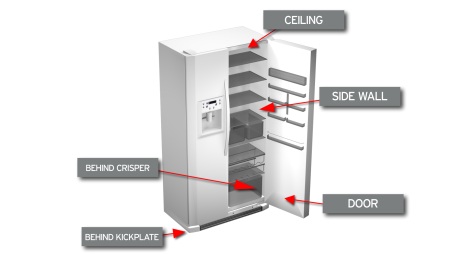
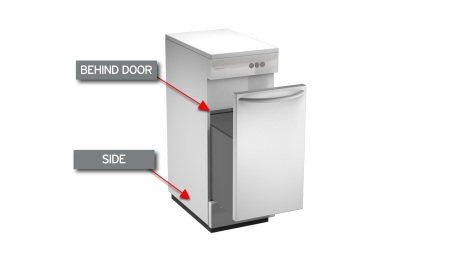
See inside your appliance

See inside your Refrigerator

Enter the model number of your appliance below to get a breakdown graphic of your appliance.

Locate the model number on your appliance.

Appliance Parts

Ready to find your appliance part? Use our Appliance Part Finder to find the part you need.

appliance parts

Suggested Products

Refrigerator Water Filters

Top-Selling Appliance Parts

1. Direct Drain Hose Attachment for Dehumidifier

Brand: Whirlpool, Part Number 8212502

2. Dehumidifier Float Part

Brand: Frigidaire, Part Number: 5303306080

3. Closet Dehumidifier

Brand: General Electric, Part Number WX75X100

4. Dehumidifier Water Bucket

Brand: 5303303883, Part Number Frigidaire

5. Dehumidifier Blower Wheel

Brand: Misc, Part Number FD5303-010

How Do Dehumidifiers Work?

warning sign

WARNING!

To avoid personal injury or death, disconnect your appliance from its power source before you start any troubleshooting or repair work. Use caution when working inside any appliance.

Dehumidifiers are very similar to air conditioners in that they both have hot and cold coils. Dehumidifiers use refrigeration and condensation principles to remove water from the air, and thereby reduces the relative humidity of the room.

The basic components of a dehumidifier include a circulating fan, a compressor, a condenser coil (hot coil), and an evaporator coil (cold coil).

A compressor compresses the refrigerant gas, which causes it to become a hot, high-pressure gas. Next, this hot gas flows through a set of condenser coils where it dissipates its heat, and condenses into a liquid. Following that, the liquid flows through what's known as an expansion valve or capillary tube. During this process, the liquid expands and evaporates to become a cold, low-pressure gas. This cold gas flows through another set of coils called evaporator coils, which allows the gas to absorb heat. By absorbing that heat, it also collects moisture by condensing it from the air. A fan blows over the hot and cold coils to help in the process of heat transfer.

The cold coils act just like a cold glass of lemonade on a hot summer day. The moisture in the air that goes past it condenses on the sides of it, and then drips down the sides of it forming a little puddle.

In a dehumidifier, the fan pulls room air over the cold evaporator coils, which allows the water in the air to condense on the coils. This water drips into a collection bucket which you empty periodically. The air is then pulled over the warmer condenser coils which warms the exiting air. Because the air is heated as it exits, it further lowers the relative humidity of the air.

Most dehumidifiers have sensors to detect when the bucket is full. When the sensor detects that the bucket is full, it will send a signal to turn off the dehumidifier until the bucket is emptied. This will help prevent overflow and spillage of the condensed water.

Because dehumidifiers constantly have moisture sitting in the holding tanks and on the evaporator coils, you must clean them often to prevent mold spores and bacteria from growing.

Normal operating sounds can be caused by the compressor, fan, or coil tubes vibrating.

Dehumidifier Parts and Accessories

fadded line fadded line
All prices are shown in U.S. dollars. Copyright © 2013 by AP Wagner, Inc. All rights reserved.